GDPR in the salon: client records, photos and call recordings
What you may keep, for how long, and what you need to be able to answer when a client asks for their data. Without the legal jargon.
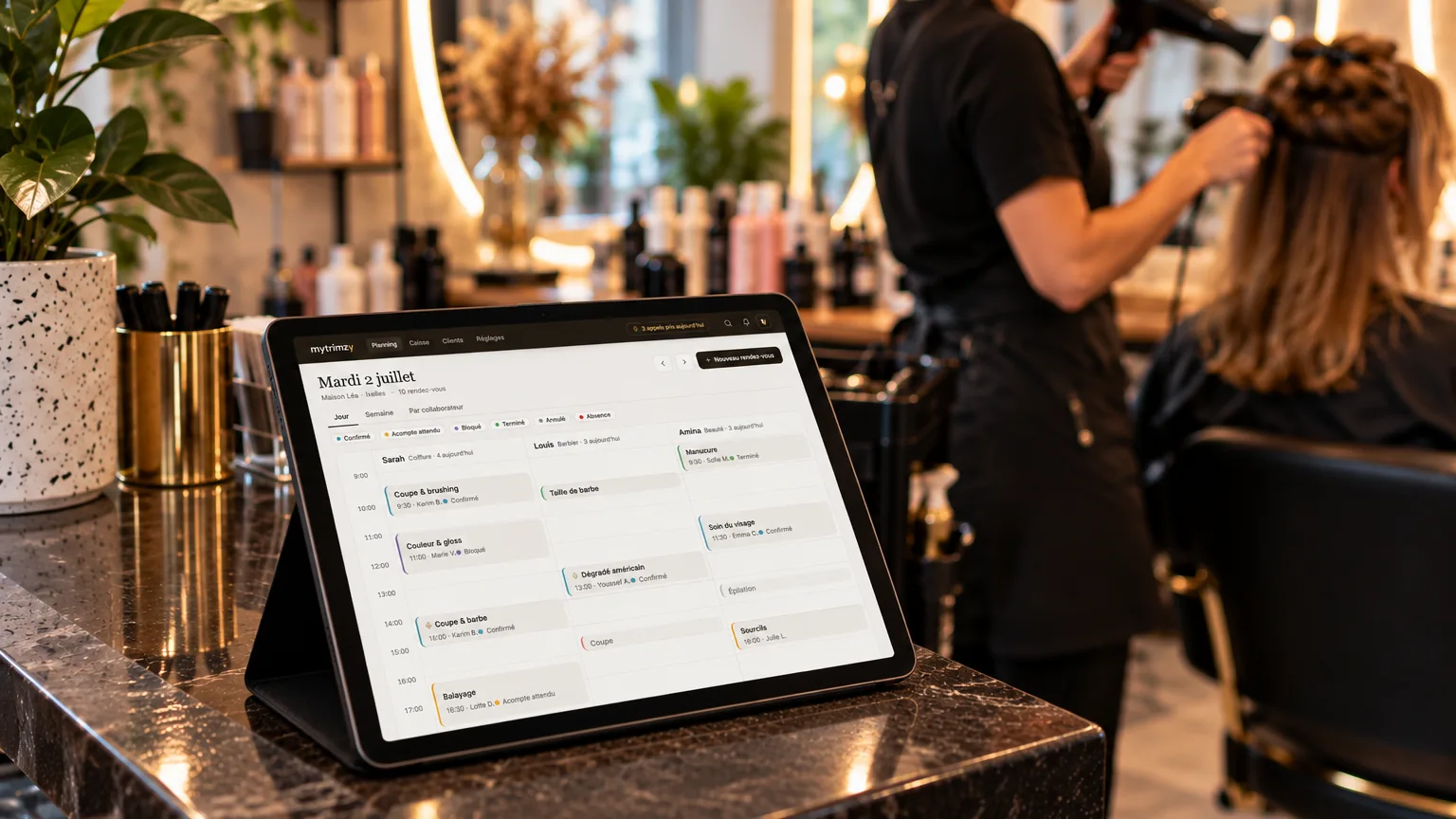
GDPR applies to a 3-chair salon too. No need to panic: most of it is common sense, as long as you go through it once.
This article gives the broad lines. For your own situation, a lawyer remains the right source.
The client list
Name, phone number, email and appointment history: you may keep those to serve your clients. That is the normal delivery of your service.
2 points that get forgotten:
- How long you keep it. Data on a client who has not been in for 10 years serves no purpose. Pick a period, 3 years after the last visit for example, and stick to it.
- Who sees what. A Saturday part-timer does not necessarily need access to every note and every amount.
Sensitive notes
“Allergic to ammonia” is health data. You may write it down if it is needed for the service and the client knows about it, but it deserves more care than “likes their coffee without sugar”.
Do not put anything in a client record that you would not read out loud in front of the person concerned. She has the right to ask for a copy.
Before and after photos
A photo of a hairstyle is personal data as soon as the person is recognisable. To post it on Instagram you need consent: asked for, clear, and revocable.
A spoken “yes” in the chair rarely holds up in law. A short written agreement, even by text message, is far more solid.
Call recordings
Recording a call is not something you can simply do. The caller has to be informed, know why, and know how long it is kept.
If you work with a phone assistant, ask your supplier 3 things: is the call recorded or only transcribed, how long is it kept, and who can listen to it. A supplier who cannot answer that clearly is the problem itself.
What to have ready
- A short privacy notice, on your booking page.
- An answer when someone asks for their data or asks you to delete it: you have one month.
- A list of your processors: software, text message provider, card terminal.
- A reflex in case of a breach: report it to the Belgian Data Protection Authority within 72 hours if there is a risk to clients.
None of this takes half a day. Together they head off the one scenario that really hurts: a complaint from a client asking something you cannot answer.